10 Tips for Making Sure Your Contractor Is On The Level
 Before thinking about what kind of Contractor to hire or if you’re still thinking about how much money you think you can save by not having the umbrella of protection that a reputable licensed contractor can provide, look over the list below. I’ve gotten most of this information from the Nevada State Contractors License Board website. It’s a great resource. Most of these tips apply to Sub Contractors (i.e. plumber, electrician, roofer) as well as General Contractors.
1. Check the Contractor’s License number by calling the Nevada State Contractors Board at (775) 688-1141 or use their easy search engine, always posted to the right on my page.
2. Research the Contractor by name to try and find out if that Contractor has held his license under other business names. In the state of Nevada, a business might be fined, go bankrupt, or have it’s license revoked, but in most cases, the person who qualified for the license ( the Contractor) can walk away and start ripping folks off again with a fresh new business license.
Research the Contractor by license number. Make sure that the license number on the card matches the number on the website assigned to the name on the card. If the name and number don’t match, don’t use that contractor. License sharing is illegal in Nevada.
3. Ask for a detailed work history from the Contractor. If there are “blanks” in his/her work history, find out why. Clue: If you see in your research that the business is newer than the Contractor looks, ask what he/she had been up to before starting this business. If you find out that he/she is from another state, ask for the license board information from that state. Not all states have a license board.
Ask for Bank References and Vendor references; another great way to establish credibility.
4. Check all of the References. Don’t be shy with this. Don’t be lazy with this. You are making a big financial investment, success requires your time investment as well.
Of course, no one is going to give references that they anticipate will be negative but there are questions that you will ask that will give you clues. More about that in another post.
5. Get a written contract. Always. No matter how nice, polite, or clean cut and handsome the Contractor might be. Contractors who “don’t usually” use a written contract have a big red blinking warning sign over their heads, even if you can’t quite see it.
6. Pay no more than 10% down or $1,000- if a deposit is required, no matter how big the job, until work begins.
7. Don’t let payments get ahead of the work. Keep a detailed record of all payments.
8. Don’t pay cash, ever, to anyone on your project. Even if they are offering a discount so that they can avoid taxes, remember, those that are dishonest in one area of their lives will most likely find it easy to be dishonest in many areas of their lives.
9. Keep a Job file of all papers relating to your project. My clients and colleagues always see me with a big three ring binder.
10. Ask for Certificates of Insurance for the Contractor and Sub-Contractor before signing the contract or writing a deposit check. This protects you. Don’t accept excuses.
Only hire a Contractor that you feel completely comfortable with!
Please send me your questions or comments. Sharing your question or problem will certainly help others. You are not alone in your concerns!
If I can’t help with your specific problem or issue, I will work to refer you to a resource that can.
Share this:

Why Hire A Licensed Contractor?

But I was going to save so much money!
I’ve been amazed, and at the same time, appalled by the number of companies springing up that encourage homeowners to be “Owner Builders”. They sell their “consulting services”, but take no responsibility when things go wrong. This is a despicable way to take advantage of the most vulnerable folks; those on the tightest budgets. A General Contractor should not cost a Homeowner much more money, if any, over the total budget if the contract is negotiated properly. Even if the cost of one’s time is NOT taken into account, a licensed General Contractor can be a smokin’ good deal. (More on that in another Post) Below are the 6 biggest reasons why it is an advantage for Homeowner’s to hire aLicensed General Contractor. I could write a dozen more, but I don’t want to loose you here, so I’ll keep it simple.
1. A license brings proven experience and a record of where the dirty dogs can be found if things go terribly wrong. – Licensed contractors have met experience and examination requirements.
Our State of Nevada requires applicants to establish their financial responsibility before being approved for the monetary license limit. A contractor, General or Sub, can only bid on a project that is under their established limit. The license board requirements help homeowners to know how financially solvent Contractors and Sub- Contractors were at the time their license was granted, but be aware, it does not guarantee solvency at the time you contract with the Contractor. I’ll write about how to research the credibility of your Contractor later.
2. The State Contractors License Board is a free service to Homeowners that will provide mediation and consultation, and disciplinary action when warranted, ONLY IF you have hired a Licensed Contractor.
Censure by the License Board remains on the Contractors public record for an indefinite period of time.
A licensed contractor who violates the law (Nevada Revised Statute 624) may be disciplined by the Board with censure, fines, or in the worst cases,loss of license.
3. Access to Residential Recovery Fund through the Nevada State Contractor’s License Board. The Fund will protect Homeowners for up to $35,000 per claim and $400,000 per contractor should the Contractor abandon the project, die, or go out of business. The fund also protects the Homeowner against gross negligence on the part of the Contractor.
4. A licensed contractor must have Worker’s Compensation Insurance and maintain a Bond. This protects Homeowners from unnecessary liability.
– If you hire an unlicensed workman, you have no protection against injuries to yourself or others that may occur at your home due to unsafe working procedures, improper workmanship, as well as innocent accidents.
5. A Building Permit should ALWAYS be taken out in the name of the Contractor. The Permit insures the Homeowner that the work being performed meets current building and safety codes and that the Contractor, not the Homeowner, will be responsible to insure that the work is done properly. In Nevada, the license of a General Contractor requires that all Electrical, HVAC (heating and air) or plumbing be done by a licensed subcontractor of that specialty. That’s a good thing. If work done improperly in those trades you want two layers of insurance to cover what can potentially be a huge mess! A Building Permit can help add value to a home upon resale, and in Nevada, when a home is sold, the new Homeowner receives the same legal protections for the work that original Homeowner received.
6. The legal and insured protections offered by a licensed General Contractor are important selling point, especially in this weak market! Some lenders will ask to see if home improvements were done with a permit and licenses.
Share this:

As we discussed in my last post, all policies are not created equal. If you have a trusted agent, they have already been in contact with you to let you know that everything is going to be OK and they will be with you for every step of the process. They will refer you to the company adjuster. That’s not passing the buck, it’s just the way the system works. If your agent isn’t offering to be there to hold your hand, make them. They earn their money by being your agent, not just signing you up. Any time you don’t feel comfortable with your adjuster, you should be able to call your agent to get an explanation or further assistance.
So what do you need to know that a less than stellar agent may neglect to tell you:
1. If your home is declared a total loss, you do not need to rebuild your house. If you have Replacement Value Insurance, you can take the check and go to South America with it if you would like.
If you decide to rebuild, you do not have to re-build “As Was”.
If your company has said that you have only a partial loss, but you feel that it should be totaled, you should seek a trusted General Contractor who is independent of your insurance company to help you make your argument. At this stage, they can possibly save you attorney’s fees.
2. You do not need to use the Contractors that the insurance company recommends, if you choose to rebuild. It’s your money and you can use it any way you see fit to get the most value for your investment. Some adjusters have special arrangements with General Contractors in their area. These arrangements are not necessarily to your benefit. As soon as the insurance company declares that your home is a total loss, that “pot” of money for replacement of your structure can be spent however you choose. Speak with your agent about the rules in your policy for not spending it all.
3. Be honest with your trusted agent. The ONLY reason not to be honest with your agent is if you burned, bombed, or flooded your home on purpose. Then they will turn you in because you should go to jail. Short of that, if you tell them what you are concerned about, they’ll find a way to help you. Remember rule #1 from Insurance Shopping.
4. You have different “pots” of money in your policy. The Structure and the Contents are obvious. What most people don’t know is that they have a Temporary Living Fund. This money is separate from the contents and should be enough to take care of your immediate needs as well as the necessities you require to live normally until your home is ready to move back into. If you choose to rent linens, towels, cooking utensils, etc, that will all go back to the rental company when you move in your home and buy your own. Your insurance adjuster will probably allow you to purchase these items out of that Temporary Fund so that you can keep the items after you move into your permanent home. Depending on your policy and adjuster, these items could include beds and other furniture. The adjuster might be able to show that buying these items is less expensive than renting them. If you’ve already rented, for the immediate, you can still purchase your own things out of the Temporary Fund. You’re going to be there for awhile. Get comfortable.
5. Be prepared to be in your temporary situation for at least 9-10 months. That may be something that you don’t want to hear, so your agent, adjuster, and possibly building contractor will not tell you. Get comfortable in your temporary abode and don’t feel guilty about it. You’re life has enough added stress now. Your Temporary Fund will probably cover you for at least a year.
6. If you decide to rebuild, try to find a Design-Build General Contractor or Project Management style Contractor. They may draw the plans for you or they have relationships with cost effective Residential Designers or Architects. More importantly, they will help insure that the home you design gives you the most value for your investment. In other words, it’s a cost effective design. They know the most cost effective engineers to use for your structural calculations. That type of contractor can help you design a home that is cost effective to build and efficient to cool and heat. They will charge an overhead percentage to help with the design and build and oversee the best team for you and work as your advocate.
Yes, I have some prejudice in this area, more on that in another post.
Thank you again Kenny Riley of Country Financial Insurance for proofing my blog for accuracy. Kenny did not write this post and had no control over it’s contents other than to ensure that it is accurate.
Next: 5 Things to know about Selecting Your Contractor
Share this:

Insurance Shopping- 3 Important things to know
When you are in the 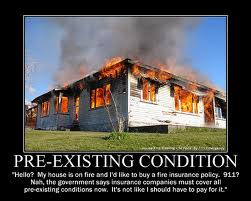 process of purchasing Homeowners Insurance,there are a list of fundamental questions that need to be asked. You won’t believe this but, “HOW MUCH” is not on that list. Any of us who have gone through a devastating loss are hopefully still here to tell you…all policies are not the same. Homeowner’s Insurance is one of the best deals out there. NO, I don’t sell insurance and don’t have anyone in my family that does. But I have rebuilt from devastating property loss and can tell you that you will want to have coverage that will make you whole again.
Here’s the short list:
1. Get a good agent you can trust through your personal social net work. Don’t purchase insurance on-line or from a complete stranger. When you have a problem, your agent will go to bat for you. An on-line operator will not. Your local agent not only wants to keep you as a client, but he or she wants to get and keep your family and friends as clients. When you experience a big loss, your happiness with them and their company is the best advertising their money can buy.
2. Make sure you ask for Replacement Value insurance,(I recommend you ask in an email), so that you have a clear and written understanding that your home and your contents will be replaced at today’s cost, and not a value that will be depreciated with age. If you choose not to replace certain items, the value for those will be depreciated, regardless of what kind of policy you have. I found that getting a few bucks for my husband’s 1978 vintage ” You Turkey” tee shirt was a win-win. Bottom line, you want to be able to go shopping to replace the things you need, and want, and not worry about pinching pennies. It’s unbelievable the amount of time it takes to replace a lifetime of necessities. Even the most enthusiastic shoppers will agree that it gets old quickly. I found that the fun stopped after about the second day. My two teenage daughters were giddy about spending Uncle Ron’s (our adjuster) money for a couple of weeks, but even they ran out of steam.
3. Insure your home for the total amount of what you believe it will cost to rebuild, not what you think you could sell it for today. Here in Washoe County at current value, modest homes can be anywhere from $125 on up for replacement cost. Homes that were once selling for $300 or more/sf would still easily cost $200/sf to rebuild, depending on the amenities included. Your agent might tell you that you can deduct for the foundation, driveway, landscaping,and excavation. It’s my recommendation that you think carefully about that. Depending on the intensity of the fire, you could wind up replacing brick, metal and concrete. Know that in addition to the actual home, plans need to be re-designed (more on that in another post) and engineered. You’ll need a building permit. All of that will need to be paid for out of your structure fund. You will probably find out that the additional premium is the equivalent of a few Starbucks (or beers if you prefer) per month. Remember: you’re buying this insurance because you might need it some day.
Thank you to Kenny Riley
for proof reading my blog for accuracy.
Disclaimer: Although I have Country Insurance, Kenny did not influence this blog in any way. Seriously.
Next, we’ll talk about 5 Things to Know about your Insurance Claim when you lose your home
Share this:

Everything you’ve worked for all your life is gone……NOT!
Before getting into the nuts and bolts about insurance policies, the different types of budgets contained in them and my suggestions about how to most efficiently spend that money (I’m so good at that, people pay me to do it for them!), I felt that it was more important to address the most immediate needs you may have because of your loss.
Our natural first reaction upon seeing our home in shades of black and grey was that “Everything we worked all our lives for was gone.” It’s a devastating feeling. All of the happy memories we collected through keepsakes and memorabilia are, in  most cases, unrecognizable. What we did find was that the most important thing we build in a life time is our relationships. The fire made the best of those relationships even stronger. It took a while, but I know that our three kids became stronger and more self-assured from the experience. We came out of the experience with a chance to re-build a better house and we had new things, but we appreciate everything so much more.
From my own experience, here’s the first most important thing I learned, It’s easier for most of us to be givers than takers. Your family and friends are reaching out to you, asking what they can do. Allow them to help you. It makes them feel less helpless themselves.
4 Easy things that friends, family and neighbors can do:
1. Help in your temporary living accommodations search. Your homeowners insurance is going to pay for whatever you spend. If you’re still on a friends couch or in their guest room, you don’t need to be.
2. Your insurance will cover meals out till you’re set up in your permanent “temporary place”. Take advantage of that while you can. After that, allow your support group to make meals for you for a while till you’re all settled in. It will help out a lot.
3. People will want to give you things to get you back on your feet. One suggestion is copies of photos from your good times together or other shared memorabilia. We were able to replace a lot of lost memorabilia and family history that way. Our family members were very generous sharing family mementos to replace some that we had lost.
4. Do not enter into any agreement with contractors or workmen without a close friend or family member there as a second opinion. You have been through a lot. They can help be a voice of reason. You were victims of something out of your control, but now, unscrupulous companies can take advantage of your fears, exhaustion, and helplessness.
NOTE: Beware of Vultures that call themselves “Insurance Advocates” or similar names. They convince victims of loss that they need their company (for approximately 1% of the claim) as a “negotiator”. For the most part, they are not attorneys, and provide no service that your insurance company or a good General Contractor wouldn’t provide for you.
This is too soon to be forking over money to attorneys as well. You will probably find that, if you have a reputable insurnace company, you’re in good hands. Really!
Later this week, I’ll address the difference between Clean Up Contractors, Disaster Contractors, General Contractors and Design-Build Contractors as well as Cost Plus Contracts and Low Bid Contracts. How fun is that??!!


 Sustainable Home Contracting Help Home Contracting Help